By
Christene Kidd
6/3/26
•
5 min


So, you got a new kitten. Now what? Here are some things new kitten parents Google at 2am, answered by yours truly.
Let’s paint a picture.
A million tiny claws are climbing up your back. Then, you suddenly feel a bundle of fur on your neck, nuzzling in your hair, almost as if your very own henchman assumed position. And then got distracted by the scent of your shampoo.
But this is no evil henchman (probably.) This is your new cat. Kitten to be exact. And this chaotic, criminally cute creature climbing your limbs like their own personal jungle gym is quickly becoming your entire personality (and the reason you’re growing more gray hairs than usual.) Now, your Reddit post history is full of things like "is it normal for kittens to vibrate" and "why is my kitten looking at me like they’d like to start a battle but aren’t quite sure which angle to attack from." Oddly specific.
But welcome to kitten parenthood. It's a lot. Especially when you realize that unlike kids, cats aren’t going to give you a lot of feedback on whether you're raising them right. They'll just… judge silently. Or pee in your plants. There’s very little in between.
So let's skip all of that by talking about the four things that actually catch new kitten parents off guard. Hopefully, you can walk into this with a little more confidence (and a lot less panic Reddit-ing.)
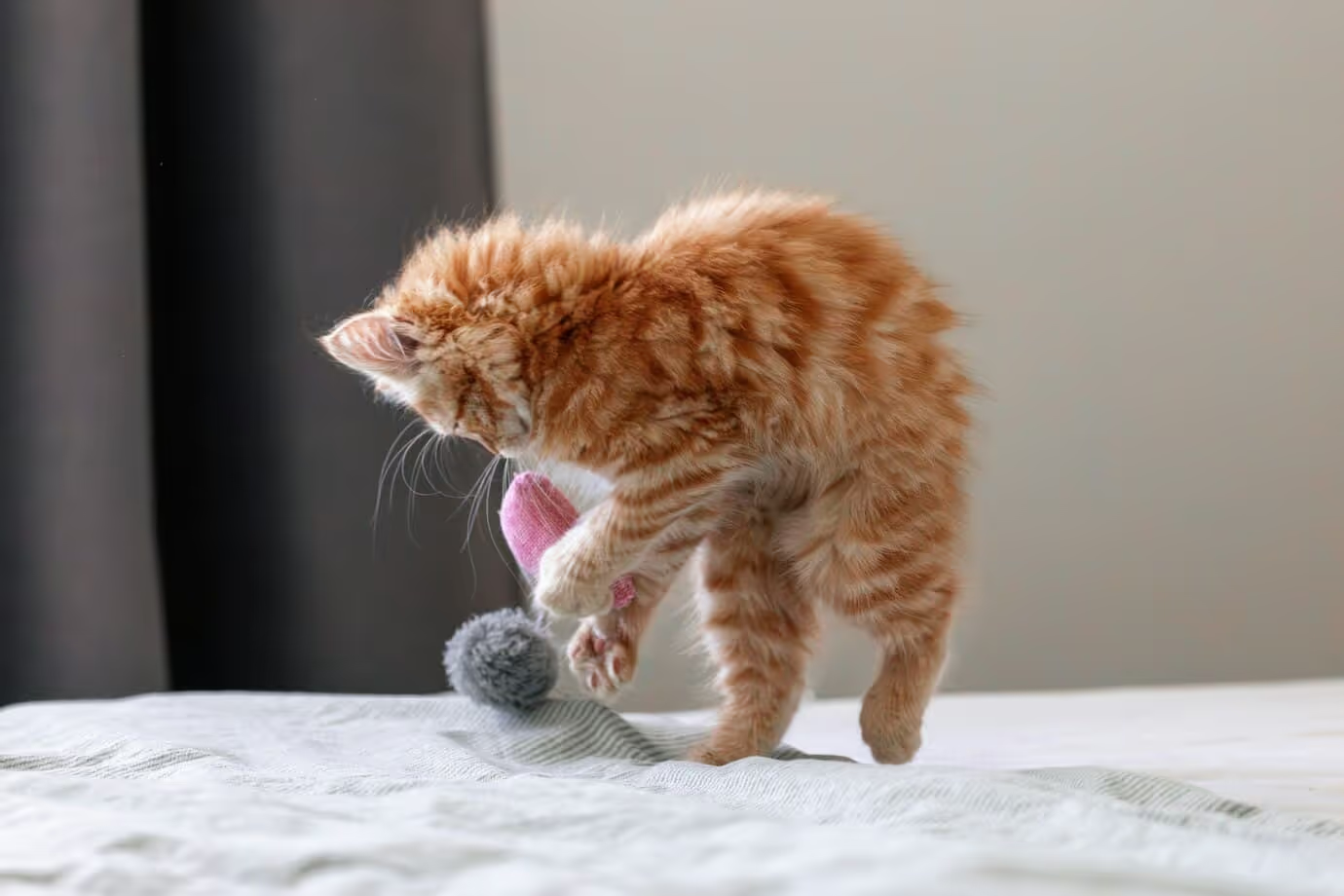
Weaning has a timing window, and if you try to push solid foods before that window closes, you're going to have a bad time.
The magic number is 5 weeks. That's when kittens typically get their back premolars (the teeth all the way in the back of the mouth). No premolars? Too young. Trying to wean too early can cause serious issues, like diarrhea, dehydration, hypoglycemia.And that is the kind of stuff that escalates fast with something as small as a kitten.
Once those teeth come in, offer a small amount of wet kitten food. The calorie and protein content is completely different, and they need it to grow.
Now, here's what nobody warns you about: kittens are chaotic eaters at first. They will step in the bowl. They will bat the food across the floor. They will lick it off your finger and refuse to acknowledge the bowl exists. And that's all normal. You just need to meet them where they are, and do whatever you need to get them trying the food.
And if they seem to be losing weight or aren't getting the hang of it? Supplement with formula. There's no tough love with kittens because they’re just babies and can get sick fast. Weigh them daily and make sure they're gaining at least 10 grams per day. The whole process usually wraps up between 8–10 weeks.
Your kitten is not urinating to spite you. Though it will always feel like a personal attack, it never is. Cats just aren’t that emotionally sophisticated. So when a kitten goes outside the litter box, something's off. And you need to figure out what.
Step one is always the vet. Before you try to solve a behavioral puzzle, you need to rule out a medical one. Urinary tract infections are common in kittens and can make the litter box feel painful. Same with bladder inflammation. If there's a physical reason, no amount of box reorganizing will fix it.
If the vet clears them, then you're looking at behavioral causes. The most common culprits:
What to do:
And if none of that works? Ask your vet for a referral to a feline veterinary behaviorist. It’s worth it.
It is completely normal to feel genuinely disturbed by your new kitten. Imagine being able to roommate with same random toddler you don’t know and without explanation. Wouldn’t you be kinda freaked out?
Not to mention, cats are territorial. Your resident kitty has spent a lot of time claiming every corner of your home. And you just dropped a chaotic tiny stranger into the middle of it. Their horror is understandable.
And the fix is slow introductions.
The stages:
Week 1 — Complete separation. The kitten lives in a separate room. The resident cat does not see them. They just... know something is happening. Give your older cat extra attention during this time. They need to feel secure.
Scent swapping. Rub a towel on the kitten and leave it near your older cat's bed. Vice versa. Feed them on opposite sides of the closed door so they start associating each other's smell with something good (food).
Visual introduction. Once the hissing at the door stops, crack it open, or use a baby gate. Brief exposure. Be prepared for some hissing. Trust me, it's okay. What you're watching for is escalation: fur standing on end, screaming, one cat refusing to eat or use the litter box. Those are signs to separate and slow down.
Supervised time together. Start with one or two minutes. Reward your resident cat with a high-value treat for staying calm. Gradually increase. If things go sideways, go back a step without frustration. Setbacks are part of this process.
A Feliway diffuser plugged in near where your older cat hangs out most can reduce the ambient stress level while all of this is happening. It's not a fix all, but it helps.
The goal, eventually, is for both gets to be bored of each other. Just two cats existing in the same space, mutually indifferent or mildly curious.
I’m sure you want to protect your little bundle of fur from the horrors of the world, including those monstrous things we call nail clippers BUT you should start clipping their nails now.
It’s very important to start while they're small and impressionable because the habits you build for them now follow them for life.
Kittens who grow up getting their nails trimmed regularly are infinitely more cooperative as adults. The ones who don't? Well, just look up cat towel-burritos. Thank me later.
Start with paw desensitization. Before you even think about clippers, spend a few days just gently touching and massaging your kitten's paws. Press the toe pad to extend a nail, release, treat. Do this two or three times a day. You're teaching them that paws being touched = something good happens.
Introduce the clippers separately. Leave them somewhere the kitten can sniff them. Put a treat on top. Let it become a neutral object before it becomes a grooming tool.
The actual trim:
If you accidentally nick the quick (it will happen eventually, don't panic), styptic powder stops the bleeding fast so keep some nearby.
Their front paws have five each including the dewclaw on the inside, which doesn't touch the ground and needs trimming even though it's easy to forget, and back paws have four. Kittens won't sit still for all 18 nails in one go. Do one paw, or even just two nails. Stop before they get stressed and come back later.
Trim every week while they're young. Nails grow fast and if it's just not working no matter what you try, a groomer or vet tech can do it quickly and cheaply.

New kitten parenthood is similar to human parenthood in a lot of ways. It’s hard to know if you’re doing things right when they can't tell you what they need or how they feel.But the litter box accidents, the older cat freaking out, the weaning confusion.. There’s always a solution. It’ll require some documentation, watching them closely, making isolated changes and not being afraid to call your vet when things get out of hand… but there’s always a right path ahead for you and your kitten.
They're more resilient than they look. And so are you.
Need help keeping your kitten on track while you're away? Kristin's Kitty Care offers in-home visits designed specifically for small apartments, anxious kitties, and routine-sensitive cats.
Contact [email protected] to schedule your cat's care.
Questions?
Get in Touch
We're here to answer your questions and requests.


Service Areas
We’ll meet you right where you are in...
San Francisco
Oakland
Alameda
Daly City
San Jose










.avif)