By
Christene Kidd
9/1/26
•
5 min
The budgeting reality check I needed before I became a cat parent.
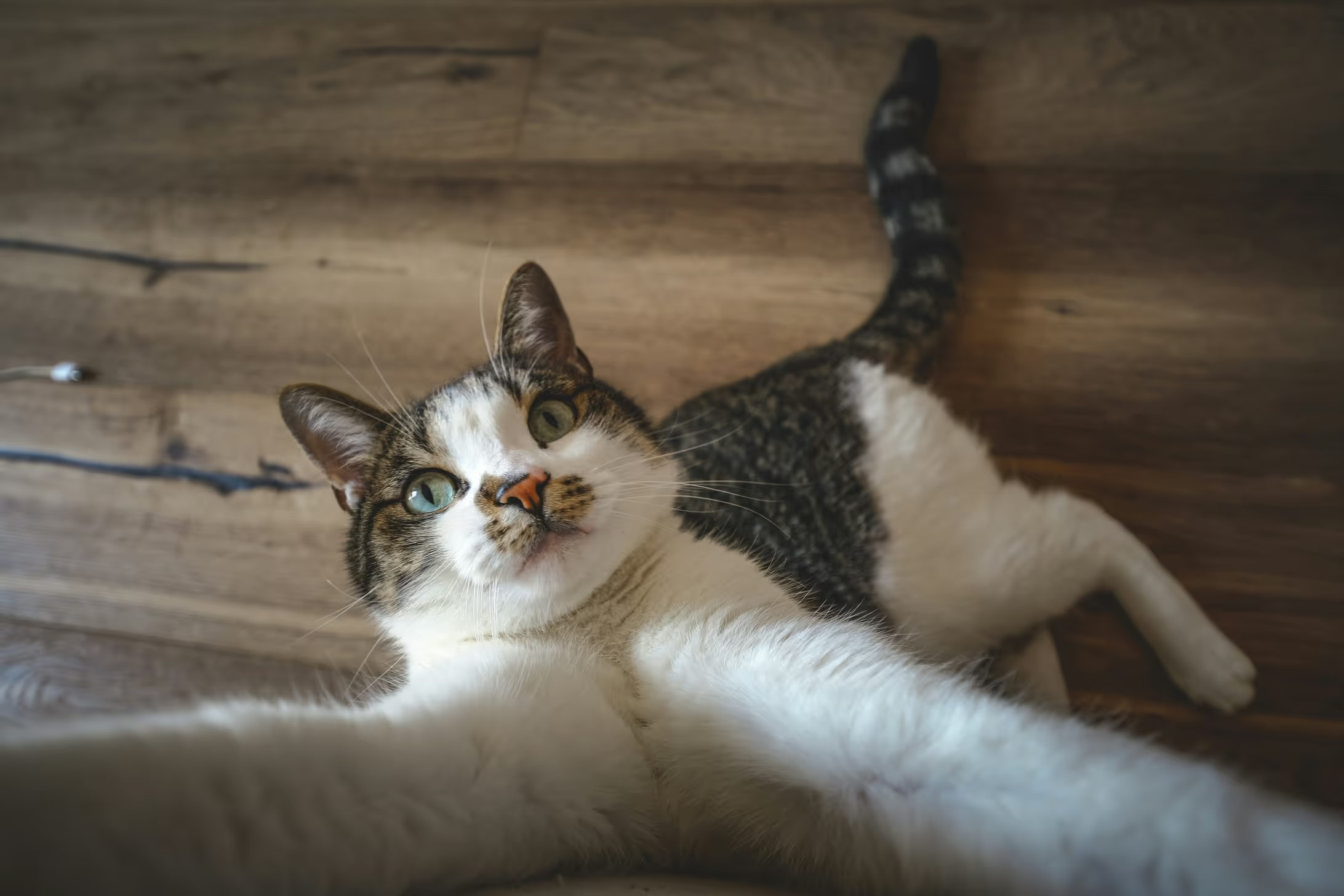
The first time I fostered a cat, I had a very specific plan. I was going to foster her and that was it.
I would provide a temporary home, get her through kittenhood, help her find a suitable forever family, and then return to my normal life.
But you can probably see where this is going.
What I hadn't really considered was that fostering a cat wasn't just agreeing to provide a home until they were adopted. Instead, it was very clearly a ploy that all of the shelters are in on. It’ll only be a month or so, they said. Not warning me about the sort of spell I’d be put under while taking care of this kitten. Not warning me about how certainly I’d fall in love.
When I inevitably did adopt her, the adoption fees were no more than $20. But the shelter conveniently left the unforeseen expenses of cat care out of the invoice. I mean, I of course knew that I’d be buying food and scooping litter for the foreseeable future. But I hadn’t quite grasped the weight of the responsibility. That I was also agreeing to decades of vet visits, emergency funds, increasingly elaborate opinions about litter, and figuring out what to do with her every time I wanted to take a trip.
And then there was the small matter of discovering that traveling internationally with a cat is a deeply unmooring experience.
Cats are relatively inexpensive compared with some pets, but "relatively inexpensive" and "inexpensive" are not the same thing.
So if you too have been adopted by a cat, here's the financial reality I wish someone had handed me before I said, sure, okay…let’s do this.
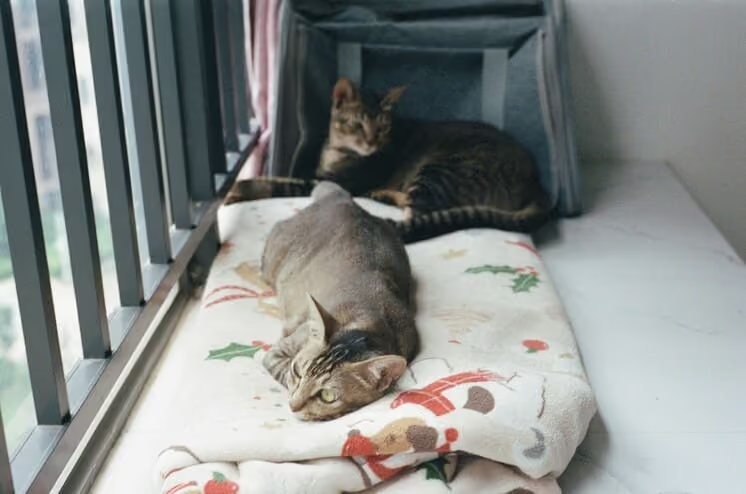
The easiest expenses to understand are the ones that happen constantly.
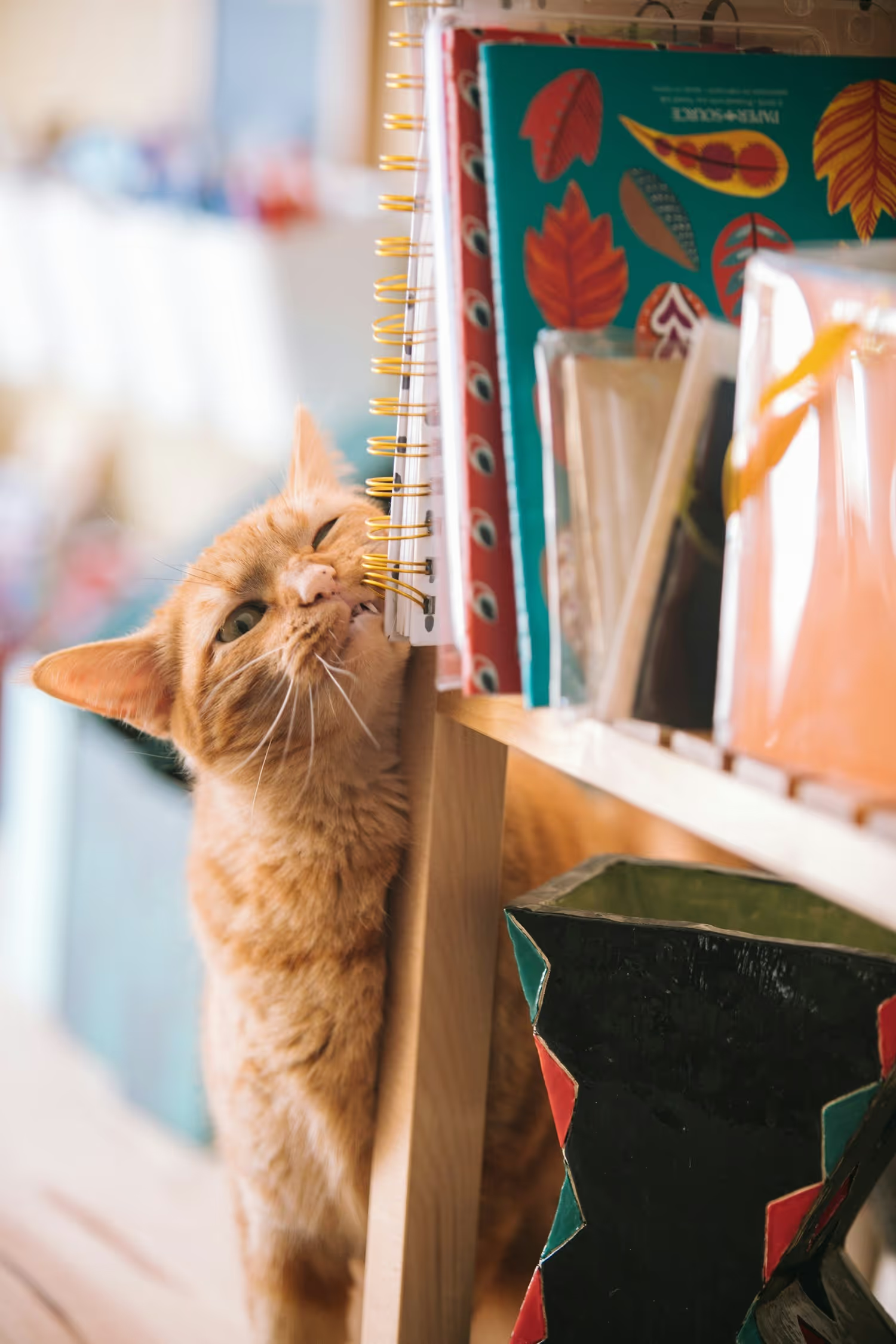
Food. Litter. Treats. Toys. Replacement scratching posts after your cat decides the expensive one you bought is inferior to the cardboard box it came inside.
Litter is one of the most predictable ongoing expenses. Basic clumping clay litter is generally the budget-friendly option, while crystal and specialty litters can cost more upfront but sometimes last longer.
Then there are litter boxes themselves.
A basic box might cost $10–$20. Automated boxes can cost hundreds of dollars, sometimes with proprietary refill systems that add an ongoing expense.
And here's the thing I learned: you don't need the fancy version.
Cats have an impressive ability to turn their nose up at a $500 piece of furniture while sleeping peacefully on the bubble wrap that came with it.
So, just start with the basics. And upgrade when you have an actual problem you're trying to solve.
Pet food is another category where it is very easy to convince yourself that being a good cat parent means buying the most expensive option available.
It doesn't.
For most healthy cats, the important starting point is choosing a food that is nutritionally complete and appropriate for their life stage. If your veterinarian recommends a specialized diet because of allergies, kidney disease, urinary issues, or another condition, that's a different conversation.
The price differential between budget and premium food can be substantial, though.
Depending on the brand, format, and size, food can easily become a $20–$50+ monthly expense—or significantly more for cats with specialized dietary needs.
The important thing to budget for isn't necessarily premium food.
It's your individual cat's food needs changing over time.
The kitten who happily eats everything may eventually become the senior cat who suddenly requires a prescription diet and will accept exactly one flavor of food manufactured on the third Tuesday of every month.
As you already know, bugs can make their way indoors on people, clothing, other animals, or through the environment. So, naturally, indoor kitties aren’t that much less prone to getting parasites than outdoor kitties.
And since treating an established infestation is considerably more annoying than preventing one, I’d definitely recommend monthly flea and parasite prevention.
This can run roughly $10–$30 per month, depending on the product and what it covers.
And if that feels like an annoying recurring expense, it is.
It's also considerably less annoying than discovering that your cat has fleas and now your entire apartment needs to be thoroughly treated.
Talk with your veterinarian about which preventative is appropriate for your cat and lifestyle.
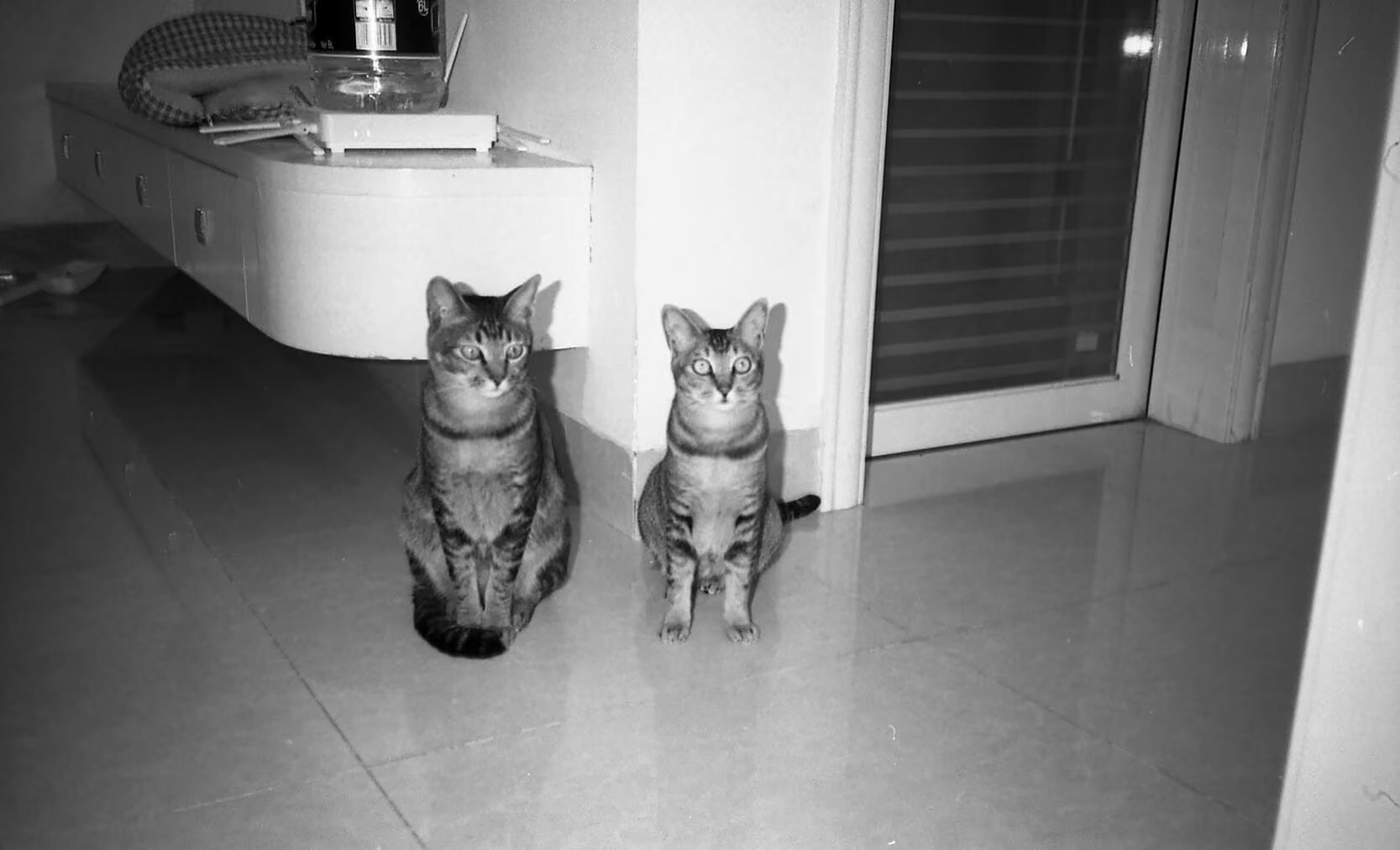
Routine veterinary care is an expense that feels manageable when you look at it individually.
An annual wellness exam. Vaccines. Maybe bloodwork. Dental care.
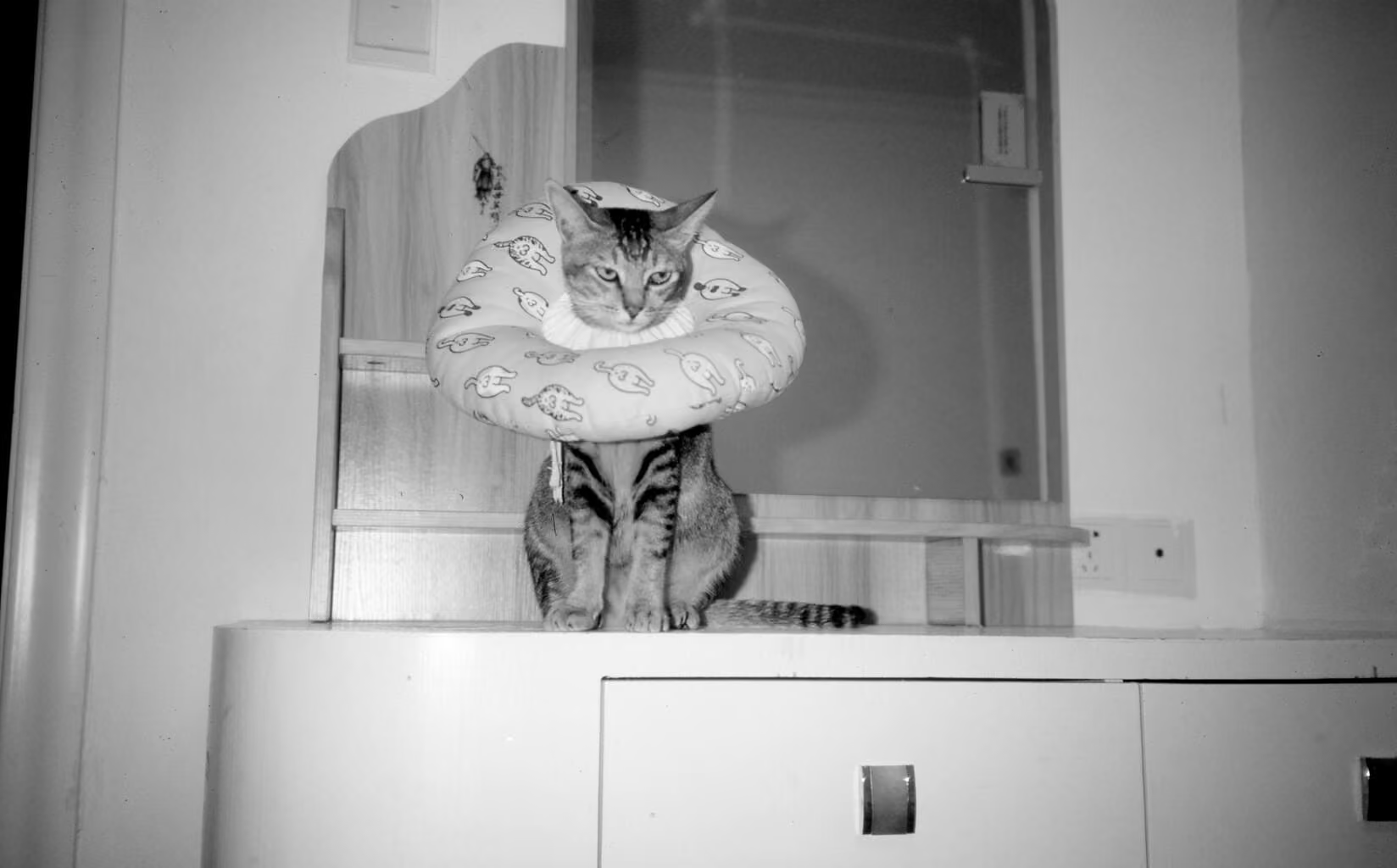
Then your cat does something deeply mysterious at 11:47 p.m. on a Sunday. And suddenly you're researching emergency veterinarians.
Routine preventive care can run a few hundred dollars per year, depending on your cat's age, health, location, and what your vet recommends. Dental care can add substantially more, particularly when extractions are required.
And emergency care is where the numbers become uncomfortable.
An emergency exam alone can cost hundreds of dollars. Diagnostics, hospitalization, surgery, and overnight monitoring can push a single incident into the thousands.
This is the expense I would strongly recommend planning for before bringing home a cat. Because when something does happen, you don't want the first question you're asking yourself to be whether you can afford to find out what's wrong.
There are two common ways to prepare for the big vet bill:
Pet insurance gives you a predictable monthly expense in exchange for coverage according to the policy's terms.
Self-insuring means putting money aside every month specifically for veterinary emergencies.
Neither approach is universally better.
Insurance can be particularly valuable when a cat is young and healthy because many policies don't cover pre-existing conditions. A dedicated savings account gives you more flexibility but requires enough discipline—and enough time—to build the fund before you need it.
The important part is having a plan.
"Hopefully nothing happens" isn't a financial strategy.
I learned this the same way most cat parents do: by realizing that being responsible for another living creature means preparing for the boring and the catastrophic.
This is where my original mental math fell apart.
I had considered the cost of food.
I had considered litter.
I had considered vet bills.
I had not considered what it would mean to be a cat parent who wanted to travel long distances... with their cat.
There is a huge difference between:
"I'm going away for a weekend."
and
"I'm moving my cat across the Pacific."
For a normal trip, you're usually budgeting for a sitter or boarding.
In-home cat sitting can be particularly convenient because your cat gets to remain in their own home while someone maintains their feeding, medication, litter, and play routine.
But long-haul travel involves airline pet fees, an airline-compliant carrier, veterinary appointments, health certificates, vaccinations, microchip requirements, government paperwork, and destination-specific import requirements.
Depending on where you're going, those costs can add up quickly.
And then there is the logistical cost that doesn't appear on any spreadsheet: stress.
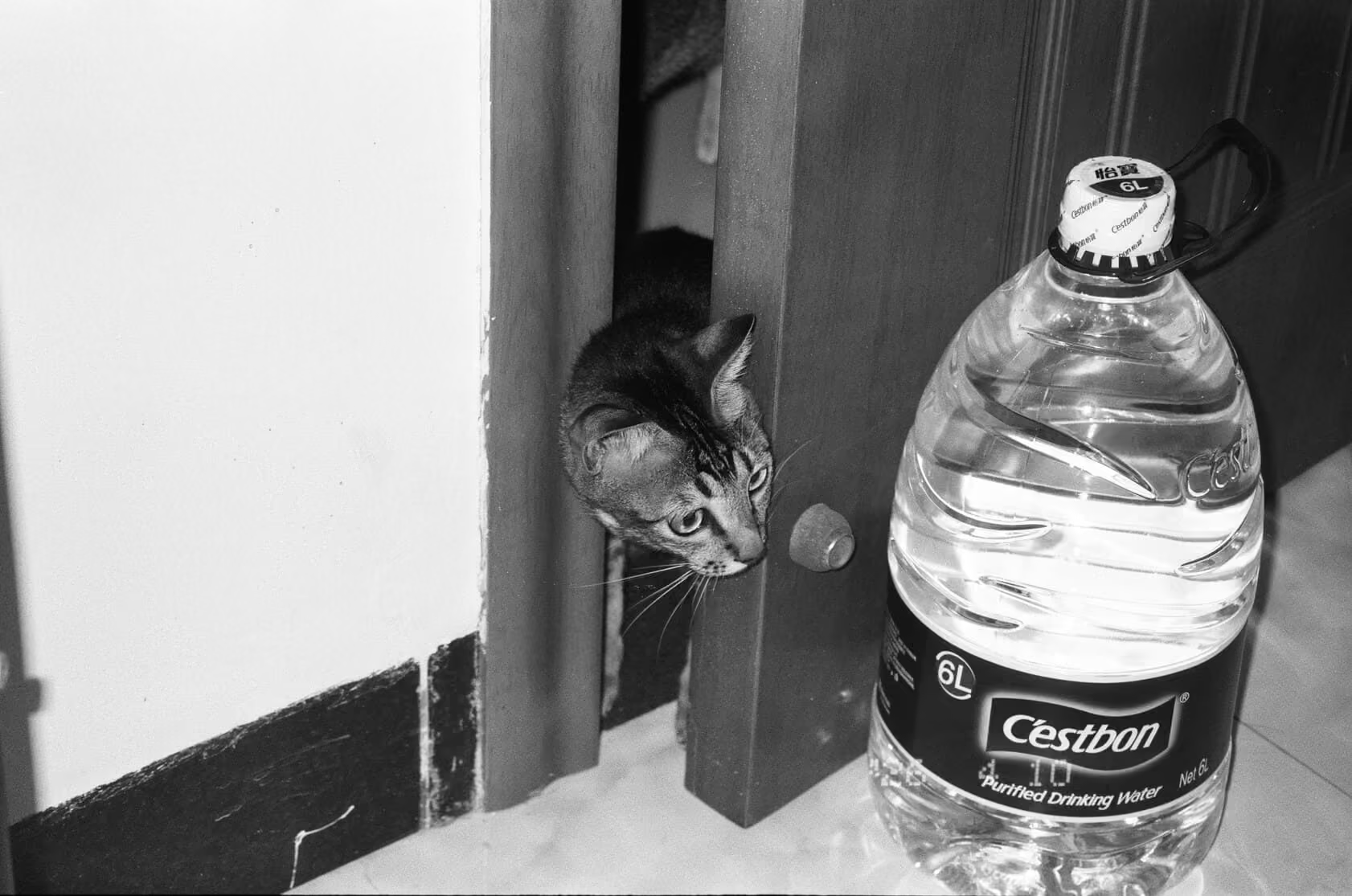
When I traveled from San Francisco to Bangkok with my cat, I discovered this firsthand.
Eventually, we made it.
But that trip changed how I thought about the cost of having a cat.
Sometimes the expense isn't just the food, the airline fee, or the paperwork.
Sometimes it's the realization that every major life decision now includes another little creature's logistics.
And though I wouldn't change my decision to adopt her; I just wish I'd understood and prepared for the scale of the commitment beforehand.

Even moving across town can come with costs.
Pet deposits, cleaning, replacement furniture, new litter boxes, carriers, and professional carpet treatment can all become part of the equation.
If your cat has had accidents, don't wait until move-out day to deal with them. Enzymatic cleaners are designed to break down the compounds that ordinary cleaners can leave behind, reducing the likelihood that your cat—or a landlord—will detect it.
For renters, this is one of those expenses that is much cheaper to handle proactively.
This is the category nobody puts on the "cost of owning a cat" infographic.
The second water fountain because your cat doesn't like the first one.
The fifth scratching post because apparently the first four were deeply offensive.
The carrier that you bought specifically because your cat had grown to hate the previous carrier.
The automatic feeder because you are no longer willing to wake up at 3:30 a.m.
The expensive cat bed that your cat has never once touched.
And, eventually, the things you buy because your cat is getting older.
A heating pad. A ramp. A different litter box. A prescription diet. More frequent veterinary visits.
Cat ownership isn't one big purchase.
It's a series of small ones that accumulate over years. And that's why the best financial prep is leaving yourself enough breathing room that the unexpected costs don’t become a crisis.
If you're considering adopting, I don't think the answer is to scare yourself out of it.
Cats are affordable companions compared with many other pets.
But they are also a long-term financial commitment.
The kitten you adopt today will still be relying on you twenty years from now. Your circumstances may change. You may move cities. You may change jobs. You may decide to travel internationally.
And through all of it, there will still be a cat waiting for breakfast.
That was the part I hadn't really understood. And I wish someone told me that I was actually signing up for a relationship that would shape my budget, my travel plans, my housing decisions, and eventually my definition of home for the decades to come.
But, even so, it turned out to be worth every penny.
How much does it cost to own a cat per year?
The answer varies considerably depending on food, litter, veterinary needs, insurance, grooming, and your cat's age and health. Routine expenses may be manageable, but emergency veterinary care can add thousands of dollars unexpectedly.
What is the most expensive part of owning a cat?
For many households, unexpected veterinary care is the biggest financial risk. Chronic illness, surgery, hospitalization, and emergency treatment can quickly cost thousands.
Is pet insurance worth it for a cat?
It can be, particularly when purchased while a cat is young and before pre-existing conditions develop. Another option is building a dedicated emergency savings fund.
Does traveling with a cat cost more than leaving them home?
Often, yes. International travel can involve airline fees, carriers, veterinary documentation, vaccinations, health certificates, and destination-specific requirements. For many cats, staying home with a trusted sitter is also less disruptive.
Is cat sitting cheaper than boarding?
It depends on local rates and the length of your trip, but in-home sitting can be competitive with boarding while allowing your cat to remain in familiar surroundings.
Heading out of town? Kristin's Kitty Care provides in-home cat sitting so your cat can stay comfortable in the place they already know best.
Contact [email protected] to schedule your cat's care.
Questions?
Get in Touch
We're here to answer your questions and requests.


Service Areas
We’ll meet you right where you are in...
San Francisco
Oakland
Alameda
Daly City
San Jose











.avif)