By
Christene Kidd
7/30/26
•
5 min

Nobody warns you about the sound. I'm talking about the kind of scream that makes complete strangers stop mid-stride to look around for the at-risk child. Mine echoed through San Francisco International Airport. And yes, people stared.
One lady asked if my cat was okay, an odd sort of question that was neither an offer for help nor an expression of genuine concern. Either way, I couldn’t warrant either a response between tears.
After nearly two months of prep for what would be the most epic adventure of her (and my) life, Ponyo had officially reached her breaking point. And so had I. Because somewhere between NoPa and South San Francisco, I'd become the girl outside an airport bathroom crying into a cat carrier while whispering,
"Please shush."
She didn't listen to me. And to be fair, neither would I.
Kitties don't understand relocation. They don't understand visas or apartment leases or why the entire world suddenly smells wrong. All they know is that yesterday they had a sun patch by a window overlooking FiDi and today they're trapped inside a plastic box hurtling toward some Great Unknown.
Stress, for cats, isn't a minor blip in their day. It’s cause enough for an existential crisis.
And while you probably aren't flying twelve time zones with your cat, we've all asked them to navigate their own version of that airport.
Maybe with a move on some smaller scale.
Or house guests.
Construction next door.
A baby.
Fireworks.
Even something as small as rearranging the living room can feel like someone quietly rotated their universe ten degrees to the left. And the result is oftentimes subtle. Like, a present next to the litter box that leaves you wondering whether they're sick...or angry...or somehow trying to tell you something.
Yes. Yes, they are.
And let's talk about what that something is and what your response should be.

Cat stress doesn't always look like a meltdown. Sometimes it looks like a slow, weird shift. Like:
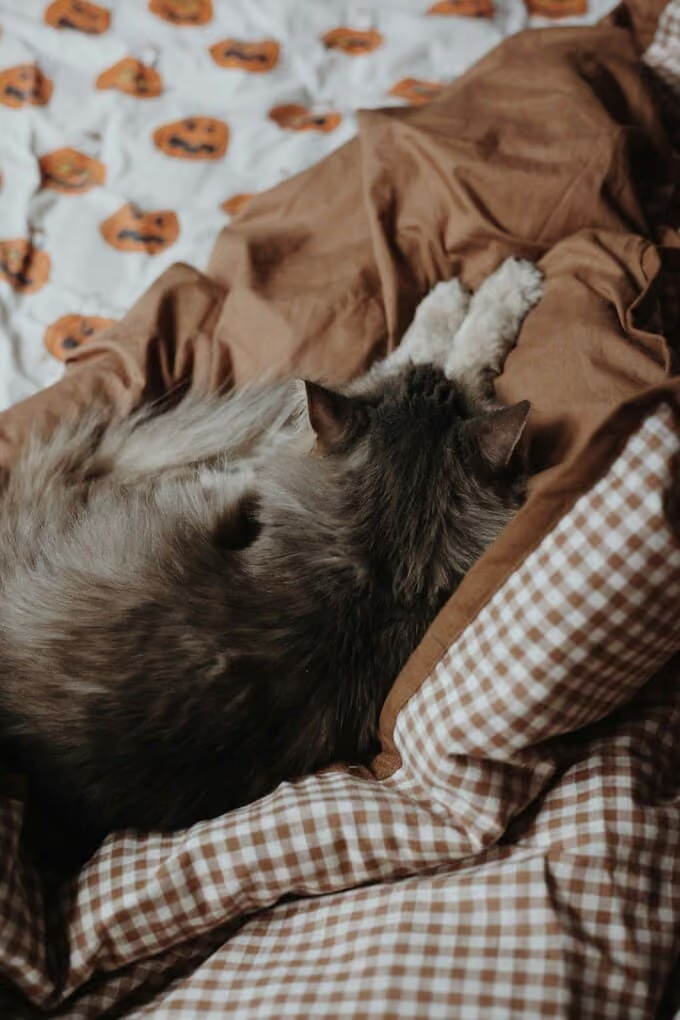
Hiding. Your usually attention-starved cat suddenly isn't. And now they’re under the bed, top of a closet, behind the water heater — or wherever feels smallest and most defensible. This is a completely healthy coping response. A cat who disappears for a few hours after a stressful event and then re-emerges is doing exactly what cats are supposed to do. A cat who disappears for days and won't come out even for food is highly concerning.
Over-grooming (or under-grooming). Stress can push grooming in either direction. You'll notice thinning fur, bald patches, or skin irritation, usually on the belly or legs, from repetitive licking. Others stop grooming almost entirely and start looking a little disheveled, which is yet another signal that something's off.
Litter box avoidance. This is one of the most common (and misread) stress signals. A litter-trained cat suddenly going elsewhere is almost never spite. It's much more likely to be anxiety, a disrupted routine, or the litter box itself having become associated with something unpleasant.
Appetite and vocalization changes. Eating less (or, less commonly, eating more), or a shift in how much your cat is meowing are both classic stress tells. A cat who suddenly narrates everything, or a normally chatty cat who's gone quiet, is telling you something changed.
The common thread with all of these: it's the change that matters, not the behavior in isolation. A cat who's always been a hider isn't necessarily stressed. A social cat who starts hiding is worth paying closer attention to.
Stress and illness can look almost identical in cats. And stress itself can cause physical problems, as stress is a well-documented trigger for certain urinary issues in cats. So "is this behavioral or medical" isn't always a clean either/or because sometimes it's both, feeding each other.
A few rules of thumb:
When in doubt, the vet visit is the move. It’s imperative to rule out the scarier explanation first as doing so can give you more time to make a correction if it is, in fact, symptomatic of a medical issue.

Once you've ruled out (or addressed) anything medical, the fixes for cat stress are refreshingly unglamorous.
Anchor the routine. Cats regulate through predictability. That means same feeding times, same play window, same general shape to the day — even when everything else around them is chaos. If houseguests or travel are throwing your schedule off, protecting your cat's routine (or getting help maintaining it while you're out) does more heavy lifting than almost anything else on this list.
Give them a safe room. During a specific stressor (think: fireworks, a loud party, a moving day) set up one quiet room with their essentials. Include their litter box, water, a hiding spot, and something that smells like you. Do this instead of trying to keep them calm out in the open. And let them choose to retreat there instead of forcing them into it.
Feliway (or a similar pheromone diffuser). These mimic the calming facial pheromones cats naturally produce, and they're one of the few "just buy this" stress interventions with real backing. Plug it in a few days before a known stressor rather than the day of, for the best effect.
Don't force interaction. It's tempting to scoop up a hiding, stressed cat for comfort. Resist. Let them come to you. Forced affection during a stress spike tends to backfire.
A quick note for our Bay Area kitties specifically: if you're in San Francisco, your cat's baseline noise tolerance is already strained. If you're in Oakland or the South Bay, backyard and neighborhood fireworks tend to be more frequent and less predictable in the summer, which makes your cat’s safe-room even more worth setting up proactively rather than scrambling to do it at the last minute.
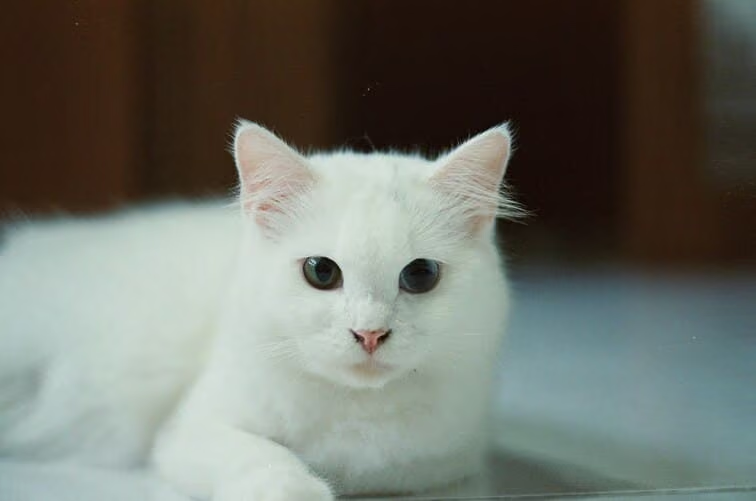
Most stress in cats isn't a mystery — it's often to do with disruption and enough of it (however that looks for your creature-of-habit) to knock them off their axis. Note changes, rule out anything medical when things escalate, and establish routine and a safe retreat.
What are the signs of stress in cats?
The most common signs are hiding more than usual, over- or under-grooming, avoiding the litter box, and changes in appetite or vocalization. What matters most is the change from your cat's normal baseline, not any one behavior on its own.
Why does my cat hide after fireworks?
Hiding is a normal, healthy stress response — most cats will tuck away somewhere small and safe until they feel the threat has passed. This can last anywhere from a couple of hours to a day or two. If hiding continues for several days, or comes with a refusal to eat, it's worth a vet check.
How long does cat stress last after a disruptive event?
It varies by cat and by event, but most cats bounce back within a few days once the stressor (guests, noise, new environment) is gone and routine resumes. Ongoing or worsening symptoms beyond that window warrant a vet visit.
Is my cat sick or just stressed?
Sudden severe symptoms — not eating for over 24 hours, vomiting, diarrhea, or visible pain — should go to the vet first. Gradual behavior changes tied to an obvious trigger (a move, houseguests) and otherwise normal eating, drinking, and litter box use point more toward stress.
Does Feliway actually work for cats?
Pheromone diffusers like Feliway are one of the more evidence-backed calming tools available and are widely recommended by vets for situational stress like fireworks, moves, or new houseguests. They tend to work best started a few days ahead of a known stressor rather than the day of.
Can moving or houseguests really stress out a cat?
Yes — cats are territorial and routine-driven, and both moving and houseguests disrupt the predictability they rely on for a sense of security. It's one of the most common stress triggers vets see.
Keeping a cat's routine steady is most of the battle during a chaotic summer — and it's exactly what in-home visits are built for. Kristin's Kitty Care offers routine-anchoring visits for stressed, sensitive, or just-plain-done-with-houseguests cats across San Francisco and the South Bay.
Contact kristin@kristinskittycare.com to schedule your cat's care.
Questions?
Get in Touch
We're here to answer your questions and requests.


Service Areas
We’ll meet you right where you are in...
San Francisco
Oakland
Alameda
Daly City
San Jose







.avif)